Finding Meaning in a Tired World

I read this awful piece from the Wall Street Journal by Andy Kessler the other day, and I’ll probably make all you students read it too. It begins thusly:

You hear these all the time now. “I want a career with a purpose,” which usually means an activist. Or “I need a good work-life balance,” which suggests someone doesn’t want to work very hard. Gimme a break.

It will perhaps not shock you that this former hedge fund manager* thinks so little of the purpose or balance of other people’s lives, but it was striking. If the idea behind the Quiet Quitting movement is that people have been pushed to the limit for a long time, and now there’s finally a moment when workers have the upper hand, and are going to use that upper hand to push back, then “Gimme a break” is a flaccid response. Is this the best argument against — and I bet Kessler doesn’t like this phrase either — self-care?

Wanting a career with purpose, it seems to me, has motivated people into all kinds of careers other than activism, for a long time: social work, health care, and education being a few among them (again, I sympathize that a hedge fund manager may not be able to relate to this, though I might have thought he would be able to imagine it). I wouldn’t say that I got into teaching primarily for a sense of purpose, I found one there. And I find it hard to believe that most average people in many, many lines of work would not, if pressed, connect their work to some kind of meaning beyond the making of money. One of the remarkable features of Studs Terkel’s classic oral history Working (1974) is that he interviews all kinds of people in all kinds of careers, and so many of them talk about the meaning, or lack of meaning, in their work. Here’s Sharon Atkins, “a receptionist at a large business establishment”:

Until recently I’d cry in the morning. I didn’t want to get up. I’d dread Fridays because Monday was always looming over me. Another five days ahead of me. There never seemed to be any end to it. Why am I doing this? Yet I dread looking for other jobs. I don’t like filling out forms and taking typing tests.

There’s more to say about this, but in the interest of modeling good blogging-as-thinking, I will leave it off for now with this question: What other options do we have for helping to give people meaning for necessary work besides (a) saying “gimme a break” or (b) paying people to not work?

[* This is not to sincerely impugn the humanity of hedge fund managers, some of who understand the importance of purpose and balance in people’s lives. They are, as Ken Robinson once said about university professors, “just another form of life.”]
Posted in Uncategorized | Leave a comment

What’s Wrong with the MCU?

Certain members of my family have been of this opinion for some time, but after seeing Black Panther: Wakanda Forever this weekend, I’m having to face up to it as well: The MCU has lost its way. About a year ago, being very excited about the lineup for the next twelve months. We were getting the Spider-Man crossover. A new Thor movie from Taika Waititi, who had killed it with Ragnarok. A Dr. Strange movie exploring the Multiverse. And another Black Panther film from Ryan Coogler.

I can’t be the only one who looks back at the group now and thinks that every one of these films was a mess. Going back farther, by my count, the Marvel Studios has made one really good film since Avengers: Endgame, which was Shang-Chi. Great characters, great actors, great directors; lengthy, tedious movies. How? I have three theories, presented here from most optimistic to most pessimistic.

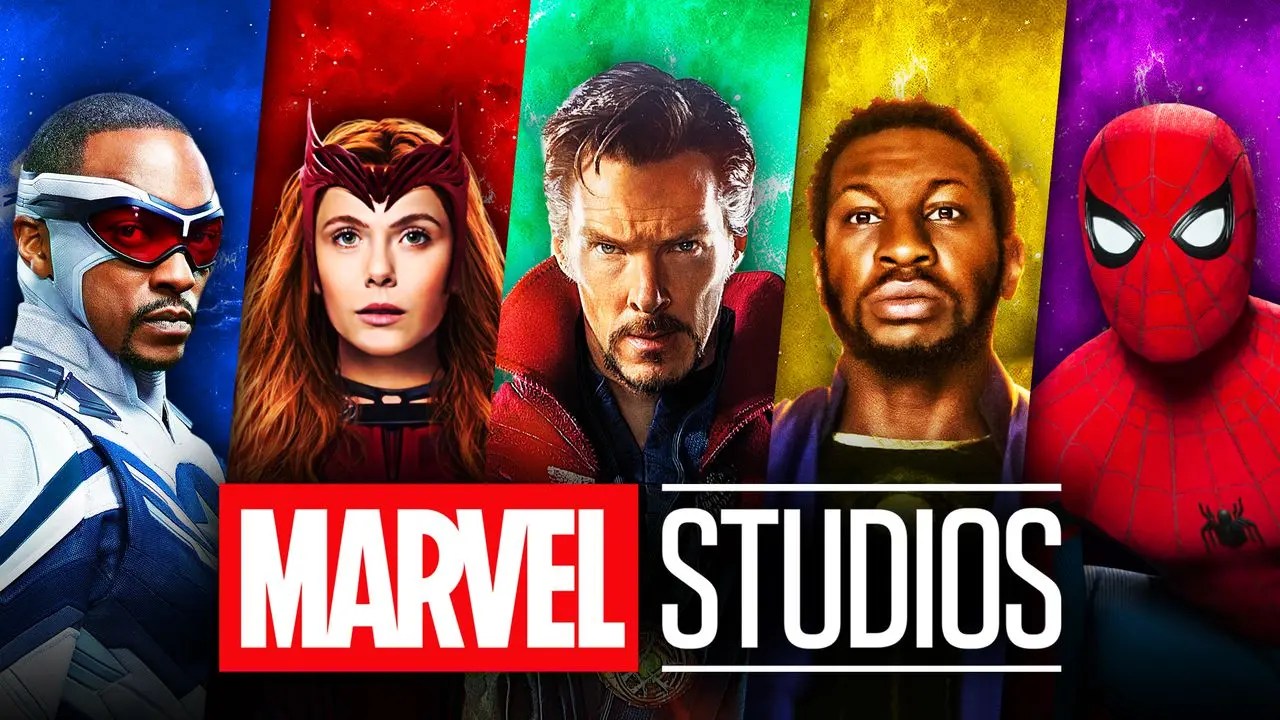
Why aren’t these movies working anymore? Image Credit: TheDirect.com

1. COVID. Films of this scale are huge productions involving hundreds, if not thousands, of creative and technical players. And for most of Phase Four we have been constrained by a global pandemic. How many sessions of people sitting down together to work on the finer points of plot outlines, dialogue, logistics, etc. were lost? How many of the people involved were dealing with big distractions, as everyone’s lives were disrupted? Maybe it was inevitable that this kind of production was going to suffer during this period, and, as we continue to adjust back to this new normal, the ship will right itself.

2. Niche Comic Book Plots are Too Convoluted for Mainstream Film. The plot of every Phase One MCU film can be explained in one sentence. After submitting to a medical experiment, weakling Steve Rogers is transformed into super-soldier Captain America and fights in World War Two to defeat the Nazis and HYDRA. Kidnapped by terrorists, genius arms dealer Tony Stark builds himself a super-suit and deals with the consequences of his past actions. Nick Fury assembles a team of superheroes to stop an alien invasion. Now try this with, say, Dr. Strange and the Multiverse of Madness or The Eternals or Spider-Man: No Way Home.

3. The MCU Should Never Have Worked In the First Place. Name the second-most-successful 30-film franchise. You can’t, because nobody has ever attempted to do what they’re doing at the clip they’re doing it. Star Wars is the closest, at around a dozen films, and the fastest they’ve ever turned them out is the stretch between 2015 and 2019, when they produced one per year for five years. This had wildly uneven results, ending with a film so bad that they decided to just stop making Star Wars movies for a while. No other superhero franchise has survived past five films, and the Warner Bros.’ DC films are laughably bad. Who else belongs in the conversation? The James Bond franchise is probably the most successful, because it does a hard reset with every new Bond actor.

Meanwhile, Black Panther: Wakanda Forever earned $180 million domestic over just the first few days, so it’s very possible that the powers that be do not see this as a problem that needs fixing.

Posted in Uncategorized | Leave a comment

The Case for Recasting T’Challa

Black Panther: Wakanda Forever releases this weekend, a movie that I wasn’t sure would get made two years ago. When news broke that Chadwick Boseman had died of cancer, the tragedy went beyond just losing a tremendous actor and, by all accounts, a beautiful person. In Captain America: Civil War, Boseman had brought to life a larger-than-life Black superhero at a time when studios were still not convinced that a Black superhero could be financially successful. It seems ridiculous now. Ryan Coogler blew up that myth to the tune of a $700 million box office with the first Black Panther film, and did so in a movie that leaned way into the Afro-futurist aspects of the mythology. By the time Boseman made his fourth appearance, in Avengers: Endgame. he had inspired countless young Black fans, who had finally been given a hero who looked more like them the white guys named Chris who had fronted most of the MCU films up to that point. It was not going too far to say, when he died, that the world had lost an important Black icon.

Understandable, then, that MCU boss Kevin Feige has insisted, over and over, anytime anyone bothers to ask him, that they are not going to recast T’Challa. How could they? Once the sequel was announced, fans debated who might take over the role from T’Challa, however they account for his death; the answer is the worst-kept secret in the MCU, but this is a spoiler-free blog, and the answer is beside the point. My argument here is that, even though their reluctance is for a good reason, they should recast him. And I believe they will.

Chadwick Boseman as T’Challa/Black Panther (Matt Kennedy/Marvel, via The New York Times)

The rationale for recasting is, ironically, the same as the rationale for why they shouldn’t: Boseman’s performance of the role meant too much. But that’s exactly it: The love for his performance in part demonstrates the hunger for a character like T’Challa. And while they can get away with handing the mantle off to another character, T’Challa is too important a character in Marvel Comics to allow the tragedy of Boseman’s death to rob Black audiences of the most important Black hero in their canon. They did a similar thing with Captain America, handing Chris Evans’ shield to Anthony Mackie’s Falcon. But do we really believe we’re never going to see Steve Rogers in a movie again, when we’ve had six actors lead a movie as Batman in the past thirty years?

Actually, I think they’ll recast T’Challa and Steve Rogers in the same movie. And Tony Stark. And Nick Fury, and whoever else they need to because of age or contracts:

Posted in Uncategorized | Tagged , | Leave a comment

My COVID Wall

Two years ago today, I sent away my AP Lang class with a flippant, “If we never come back from spring break, it’s been a pleasure being your teacher.”

Hilarious.

Of course, we didn’t come back from spring break in person, and for many of those students it was, in fact, the last time I saw them. I think a lot of people are thinking back ruefully about our naïveté two years ago (aside from the then-doomsayers who are, I assume, taking morbid victory laps).

I suspect like many of you, I had to find some ways to spend the time that I suddenly had at home. When you have kids, the time more or less fills itself, but we had to do something. I started off trying to engage my students with online work, but no sooner had I emailed them than the District wrote all teachers, saying “DON’T GIVE STUDENTS ONLINE WORK. WE WILL GIVE YOU FURTHER INSTRUCTIONS SOON.” So then I had to figure out what I was going to do with the extra time we had. The increased anxiety about COVID was not conducive to reading or writing for me; I had a hard time focusing on thinking. I needed something active, something constructive, something that would allow me to shut off my brain.

So I started building a wall.

A small section of my COVID Wall, built from Chilton Steppers, which sounds like an old Vaudeville act.

I had planned to do some landscaping since the previous summer. We had torn out an old ramp that wrapped around the corner of our house, and between the sidewalk and where the ramp had been were a million orange tiger lilies, attractive for about one week of the summer and trashy the other fifty-one weeks of the year. So I had ordered a whole bunch of Chilton steppers, wide, flat stones intended not for building a wall but for laying out on, say, a patio. My plan was for the stones to be freestanding, using no mortar or adhesive to keep them in place, so I thought wider was probably better anyway, so they would be less likely to shift over the colder months. The stones had arrived late in the summer of 2019, too late to begin the project. They sat alongside my driveway through the fall and winter.

Then, lockdown. Faced with beautiful weather, unable to communicate with students. This, I decided, was the time.

I would not say I knew what I was doing, but I was fine with that. I’m not a “how hard could it be” kind of guy when it comes to projects like this, but one thing I had learned from my dad was that if you have access to YouTube, along with some humility, patience, and common sense, you can figure these things out. I dug out the flowers and a whole lot of dirt, and laid the first layer of stone about one-third of the length I envisioned it. I started in the middle for some reason, instead of at one end or the other. Stone by stone, I laid them in place, one on top of the other, trying to consider their complementary colors (they were not at all uniform, as you can see above), their shapes, the lines created where one stone ended and the next began, and just kept on laying them. I may write more about the process later, but the point here is that, although I would have eventually gotten this work done, for me the building of it will always be associated with that first spring of COVID, when the world seemed more still than it had been in a long time, and life was paused.

I tried some other things out as well, but I’ll save those for future posts. What did you try during the pandemic? Did any of it continue to be part of your life when things returned to (at least somewhat) normal?

Posted in Uncategorized | Leave a comment

Goings On Around the Internet

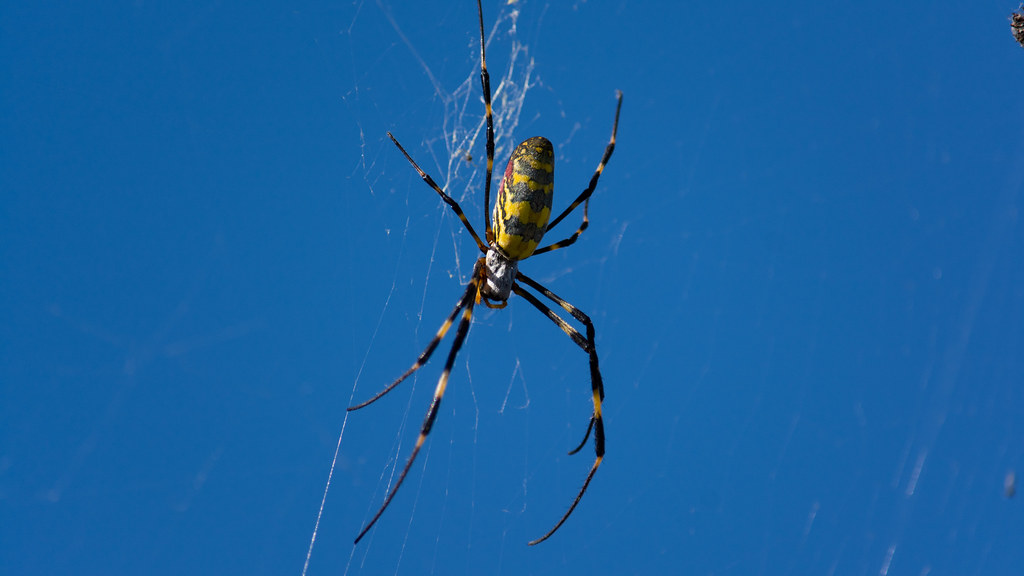
Have you heard of joro spiders? Do you like sleep? If you said no to both, learn about this enormous new* species here.

Photo Credit: “Joro Spider” by jdnx is marked with CC BY 2.0

I am very excited for the new Obi Wan Kenobi show.

Although it does draw fresh attention to the fact that George Lucas didn’t think through his decision to make robes the default Jedi uniform (warning: language!).

Not a surprise, but another study says that mask mandates were effective in curbing the spread of COVID-19.

And finally, my Denver Broncos finally have a quarterback for the first time since Peyton Manning retired. Don’t understand the people thinking they gave up too much — if you’re a quarterback away and you go out and get a future Hall of Famer, I don’t care what you had to give up. Patrik Walker of CBSSports agrees with me.

Posted in Uncategorized | Leave a comment

Welcome Back!

I haven’t used this blog in years and years, but I decided it was time to use it again. (Feel free to go back through and see what I said to my Kennedy AP Lang students in the distant past!)

Here you will not only have access to your colleagues’ blog posts, but also to blog prompts, “best of” posts, and general blogging suggestions. Plus, you have the pleasure of seeing that now I have to blog as well! Enjoy!

Posted in Uncategorized | Leave a comment

Prompts for March 8

If you need a prompt for one of your posts this week, here are three options: 

1. Marcus Aurelius wrote: “Choose not to be harmed — and you won’t feel harmed. Don’t feel harmed — and you haven’t been.” To what extent do we have control over whether we feel harmed by what others say and do? 

2. In reviewing the reality dating show Love Is BlindAmanda Mull writes that the conflicts among the show’s participants seem “distressingly familiar”: “All couples argue, and lots of them have the same argument over and over again. Defensiveness, poor communication, and hurt feelings have turned us all into jerks on occasion.” Either respond to Mull’s argument, or choose another reality show you like. To what extent is relatability part of its appeal? Why? 

3. Spring trimester often gets people thinking about where they are going, and where they have been. What single piece of advice would you give to eighth graders who are getting ready to start high school?

Posted in Uncategorized | Leave a comment

Two Assignments and a Suggestion

image

“This would make a great topic for my next blog post.” (Credit)

Folks,

I’m going to continue to push you toward using your blog for the preparation work before you begin drafting your Book Review Essay (the requirements for which can now be found on Canvas here and here). So, for your three posts this week, here are two assignments and a suggestion:

  • Assignment One: I’d like you to use at least one of your posts this week to write some initial thoughts about your book. I know people are in different places. Don’t let that deter you. Even if you’re not as far as you “should” be, even if you’re only far enough to give some basic first impressions, do what you can. But if you’re halfway through, you can probably start to shape how you want to talk about this book when you’re drafting the real essay.
  • Assignment Two: Find another outside source about the same topic. Could be anything: a column from a newspaper, a report from a nonprofit organization, a video from YouTube… Just be mindful (as always) of what readers will think, and be ready to answer the questions before they’re asked: “Where did this come from? Who made/wrote it? Why should I trust it?”
  • Suggestion: Do Assignment Two twice, so that you’re even further ahead on developing and articulating your thoughts about the topic of your eventual essay.

PS — Don’t forget, you should still use images/links/etc. in these posts!


Posted in Uncategorized | Leave a comment

A Few Good Sources

I hope you’ve been making good headway on your nonfiction books in the past several days. So far, I’ve asked you to analyze an existing book review essay, and to think about how the author gives the reader context early on. Now I’d like you to start looking for some additional sources that you might eventually use in the essay you’ll write.

Today, your assignment is to find two sources that could be used in that way.

My suggestions for how you might go about this:

  • Keep track of the questions that occur to you while you’re reading. Not the questions about vocabulary, but those that could be answered through a little further research. Then go looking for articles, blog posts, videos, podcasts, and other stuff that will help you answer those questions.
  • Look for interviews with, or articles about, your author. There, you’ll almost surely find some really useful or interesting tidbits that may prove useful when you’re drafting.
  • Take a look at websites and magazines whose topics align with that of your book. Read around on the site. Look for connections with the book you’re reading. This will make it easier to tie your review to current public conversations.

There are more options than just those, of course. And once again, I encourage you to use your blog posts this week to explore some of these articles, or ideas directly from your book!

Posted in Uncategorized | Leave a comment

NF Book Questions (part 1)

At this point, you should have your nonfiction book that you’re going to review.

  1. Is there an author’s note? If so, what important information (perhaps about her/his process) does the author tell you there?
  2. In the introduction or first chapter, how does the author make a case for the relevance of her/his subject?
  3. What context does the author tell us we need to understand in order to make sense of her/his subject?
Posted in Uncategorized | Leave a comment